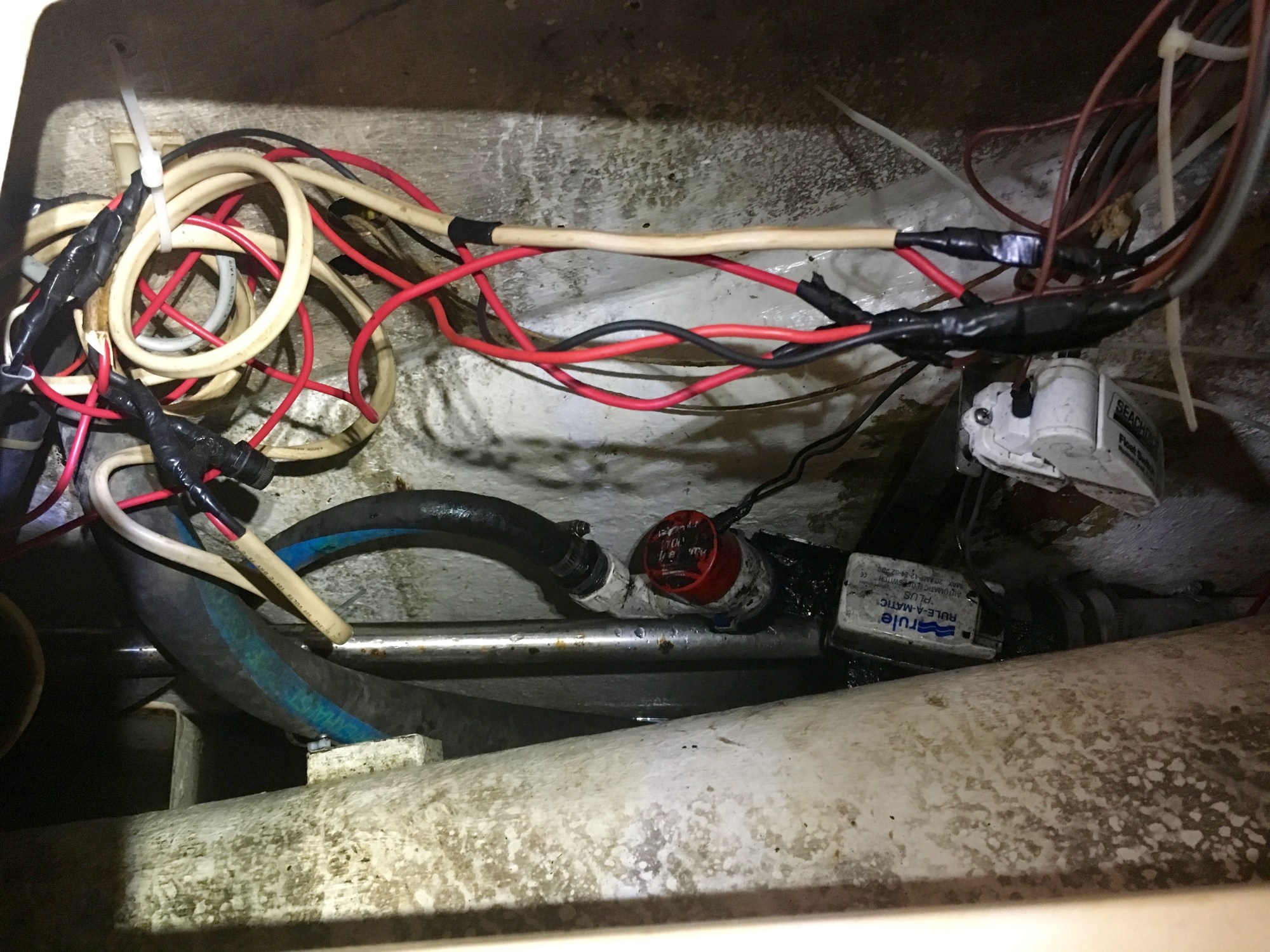
One of the first things to go wrong on Zaratan was the bilge pump.
What is a bilge pump? It’s a mechanism that removes the water from your bilge. For the less boat savvy, the bilge is a compartment below the waterline where water collects in the boat. Water could flow into the bilge for a variety of normal reasons like using the shower or the slow drip of water coming off of the propeller shaft (I’ll get into that in another post). Your bilge could also fill up because of a leak in the boat.
Luckily we have a bilge alarm that alerted us to the fact that our bilge was filling up with water. Not that we knew what we were hearing, but it did cause us to start investigating. We found a red alarm light and no way to make the incessant buzzing stop.
Tearing cushions off the 1/4 berth and looking in the compartments we found a deep dark pit. The bilge. It goes down over 4 feet and it’s super narrow. It starts out just over 1 foot wide and by the bottom it’s about 4 inches with a prop shaft running down the middle.
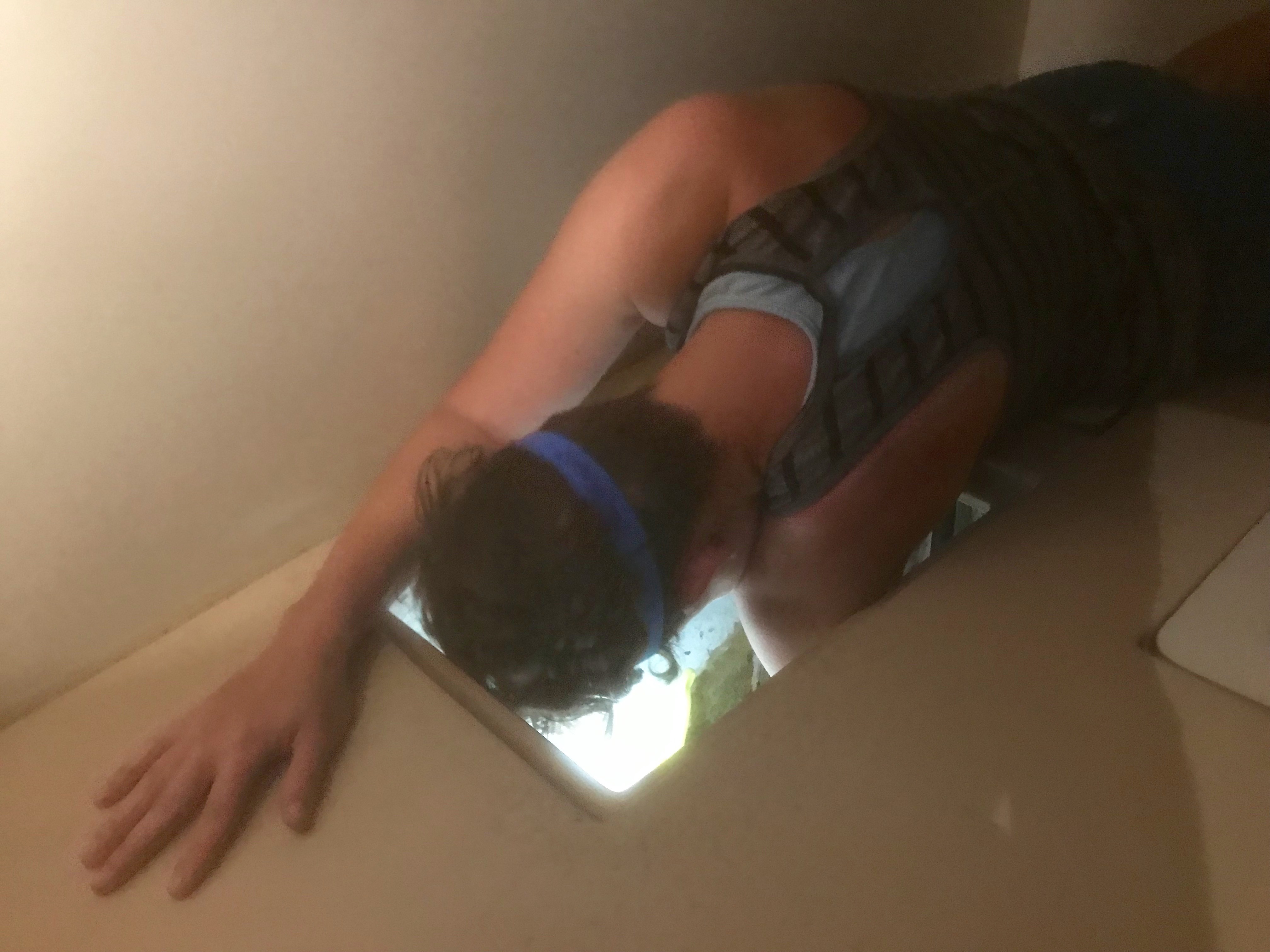
Sure enough there was a bunch of water in there, but we didn’t know how to get it out. We did know where the water had come from, which gave us at least a little peace of mind, or as much peace as we could have with the obnoxious and never ending blare of the alarm.
We had gotten caught in a Florida squall and returned to the boat sopping wet and shivering cold. As the dummies that we are, we thought it would be nice to take a hot shower on the boat, you know, to test out the hot water heater. Good news there, the hot water heater works. Our shower sump pump also works. (Again for the less boat savvy, there is a small section in our bilge where our shower water goes.). What we didn’t know was that it was manual. There is no float switch, so it doesn’t just turn on automatically.
Since we didn’t realize that we needed to turn on the shower sump pump the shower sump had overflowed into the bilge and set off the high water alarm. Fortunately we weren’t taking on water, we were just dumb.
Not sinking is a good thing, but with our bilge pump nonoperational we didn’t have a way to remove the water from the bilge to stop the alarm. Our manual bilge pump was also not working. The buzzing went on (and on, and on).
All of the instructions for how to fix your bilge pump assume that you know how to access your bilge pump, but we didn’t have a clue how to get to the bottom of the deep wet bilge to get it. As it turns out there is a metal stick that the bilge pump is attached to, but it would have taken us longer to find if a kind neighbor hadn’t pointed that out.
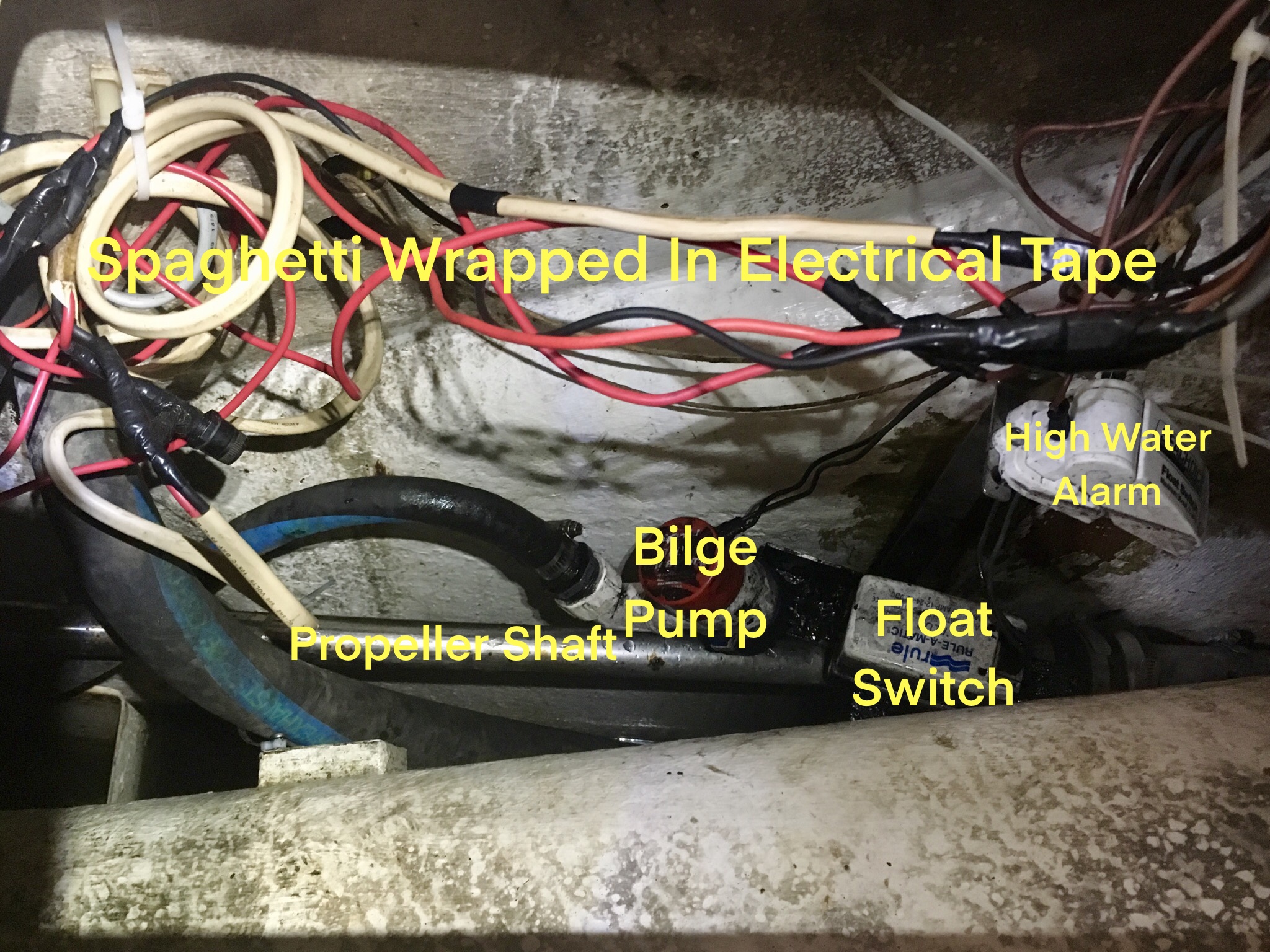
We unscrewed the stick, pulled it up and finally got the high water alarm to shut up. Relishing the quiet we pulled up the bilge pump as far as the wires and hose would allow.
I tried cleaning out the pump and removing any obstructions from the impeller. Then I tested it by filling a red mixing bowl with water and seeing if the pump would empty the bowl. It didn’t.
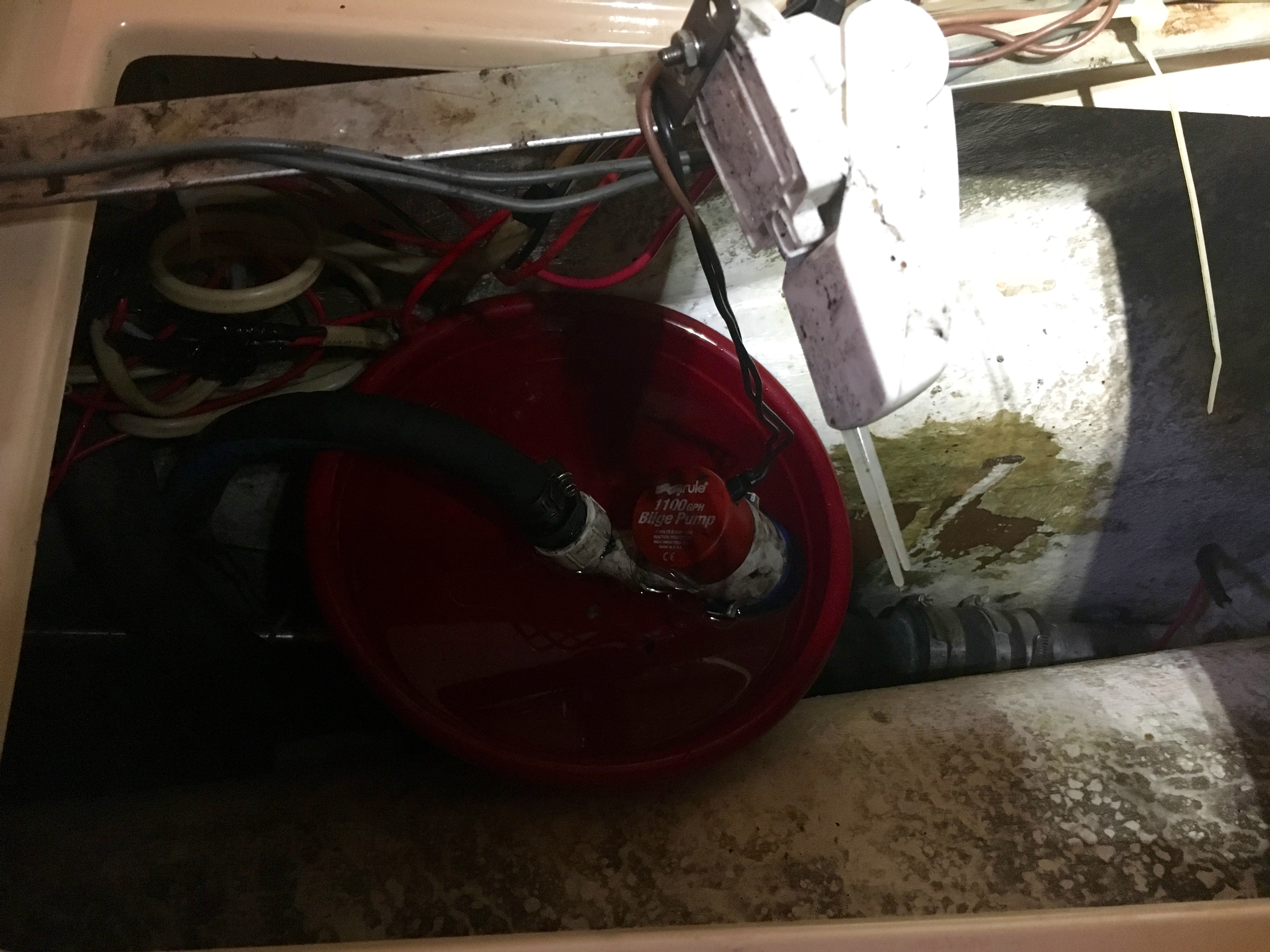
A dedicated neighbor helped us get the rest of the water out of the bilge by using a shop vac. Then we headed off to buy a new bilge pump, one with an automatic float switch. We ended up having to change the configuration of the wires, but the diagrams were helpful and it worked without issue. We also redid some of the other wire connections in the bilge since they had been done with only electrical tape and some of the connections disintegrated in my hand.
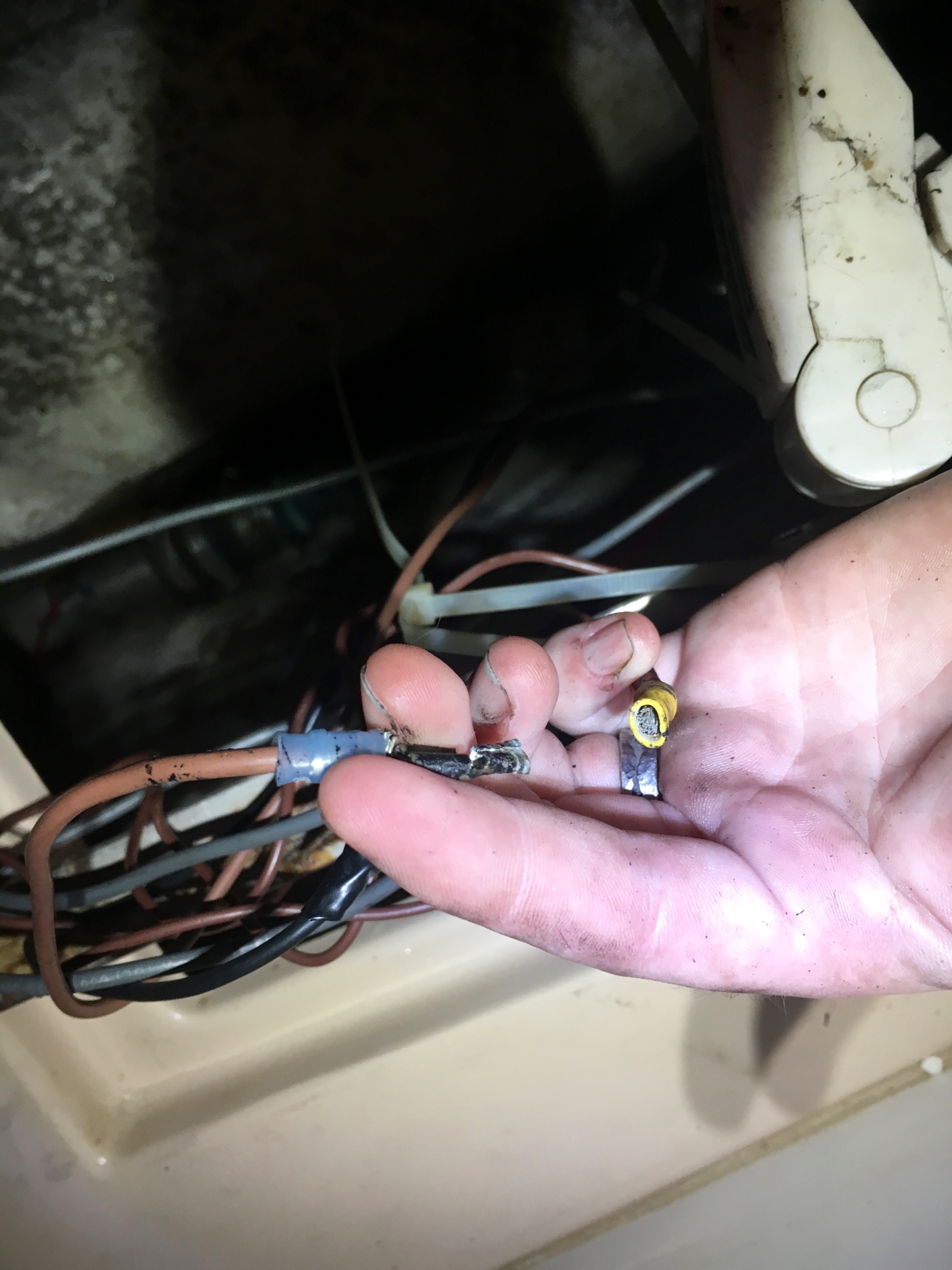
A bunch of heat shrink and a few butt connectors later we had tidied up the wiring running to the bilge pump and high water alarm. We still call the bilge the pit of despair, but replacing the bilge pump was a great introduction to the wiring and plumbing projects to come.
 Zaratan